

256-bit encryption
$500,000 protection

|
OXFORD
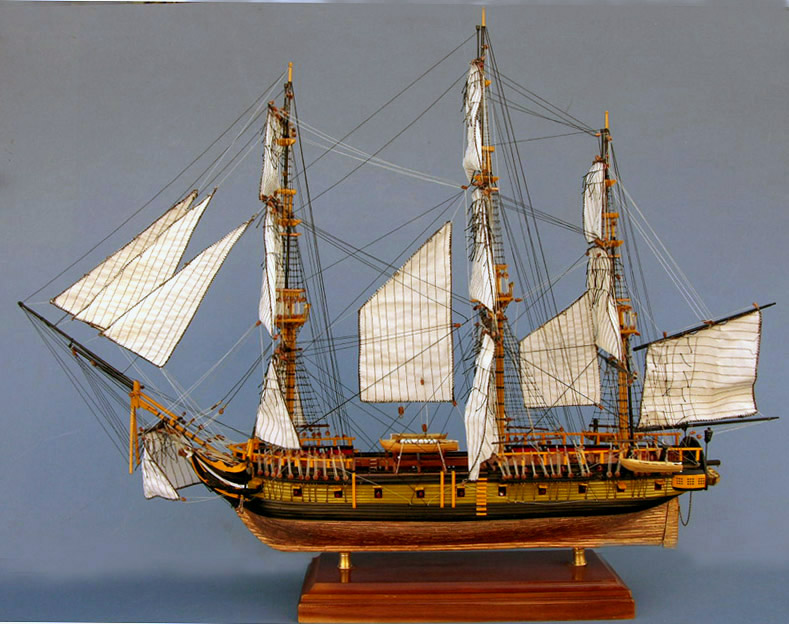
Henry Morgan privateer ship
Henry Morgan was the most
famous of all buccaneers, amassing a fortune by
plundering Spain's Caribbean colonies during the late
seventeenth century. Through his leadership, courage,
ruthlessness,
he ensured the survival of English interests in the
Caribbean. His name became legendary in the annals of
piracy.
In 1668 Morgan was commissioned by the governor of Jamaica
to capture some Spanish prisoners in Cuba, in order to
discover details of the threatened attack on Jamaica.
With ten ships and 500 men, Morgan landed on the
island, captured and sacked Puerto Principe. In an
extraordinarily daring move, he went on to storm the
well-fortified city of Porto Bello of Panama.
The governor of Panama, astonished at this daring
adventure, offered Morgan a large ransom to evacuate the
place. In London, the Admiralty
publicly claimed ignorance about this.
a.jpeg)
In March, 1669, Morgan sacked Maracaibo, Venezuela which
had emptied out when his fleet was first sighted. He
tortured the wealthy residents to discover
hidden booty.
Returning to Maracaibo, Morgan found three Spanish ships
waiting. These war
galleons -- the 40 gun flagship Magdalena, the 30 gun
Luis, and the 24 gun La Marquesa -- far outclassed
anything Morgan had in his motley collection of sloops
and converted merchantmen. Furthermore, behind the
galleons, the Spaniards had fortified an island in the
narrowest stretch of the inlet with cannon and infantry.
Maracaibo's governor Del Campo offered to let Morgan go
if the privateers turn over the loot they had
taken from the area. He gave Morgan two days to decide.
The buccaneers decided to
fight!
At dawn on April 31st, Del Campo awoke to find a half
dozen small English ships sailing towards his fleet. He
ordered the galleons into position and fire a
broadside. The flagship Magdalena had barely discharged her first
barrage when a small English ship, laden with
explosives, crashed into its side. A
English crew of twelve men grappled their ship
to the galleon, lit several fuses, then jumped over the
side and swam for their lives. Behind them the exploding fire ripped a hole in the side of the Magdalena and
flames raced uncontrollably through the galleon. Within
minutes Del Campo gave orders to abandon the flagship.
Meanwhile the captain of the Luis had ineptly run his
ship aground in the narrow waters by the inlet, and she
too began to sink. Morgan focused his attention on the
La Marquesa, which was soon surrounded by his ships and
boarded. After a short bloody fight she was in English
hands.
In the euphoria of victory, Morgan ordered an immediate
frontal assault against the Spanish fortifications on
the island. Here, however, the
buccaneers were beaten back with over 30 dead and many
wounded. The setback chastened Morgan to adopt a
brilliant plan of deception. He sent rowboats laden with
men to the far shore of the island, only to have the men
duck when the boats were out of sight and return to their
ships with every man. The Spaniards, fearing a land
assault from behind, turned their heavy guns away from
the inlet and towards the vulnerable side. While the
Spaniards were busily shifting their cannons and
preparing themselves for infantry attack, Morgan raised
anchor and sailed through the inlet unscathed.
.jpeg)
In August 1670, Morgan commanded the largest force of
privateers yet brought together for one venture: 36
ships and nearly 2,000 buccaneers. His destination was
Panama-- the wealthiest city in the New World. He
defeated a large Spanish force while crossing the
Isthmus of Panama 0n Jan. 18, 1671. He burned the city
to the ground while his men were looting it.
Because the sack of Panama violated a peace treaty
between England and Spain, Morgan was arrested and
conducted to England in 1672. He was able to prove he
had no knowledge of the treaty. As relations with Spain
quickly deteriorated, in 1674 King Charles II knighted
Morgan and sent him out again as deputy governor of
Jamaica where he lived as a wealthy and respected
planter until his death in 1688.
.jpeg)
The primarily wood Oxford model
26"
long x 22" tall x 8" wide $2,975
Shipping and insurance
in the contiguous US included. Other places: $300 flat
rate.
the photos above was of a
fourth
generation model. When you order, your model will be
fifth generation just like the one in this
photo.
Model is built per commission only. We require only
a small deposit (not full amount, not even half) to start the process
(not full amount, not even half) to start the
process
$900  The
remaining balance won't be due until the model is
completed.
Click
here for lead time. The
remaining balance won't be due until the model is
completed.
Click
here for lead time.
|





