|


256-bit encryption
$500,000 protection

|
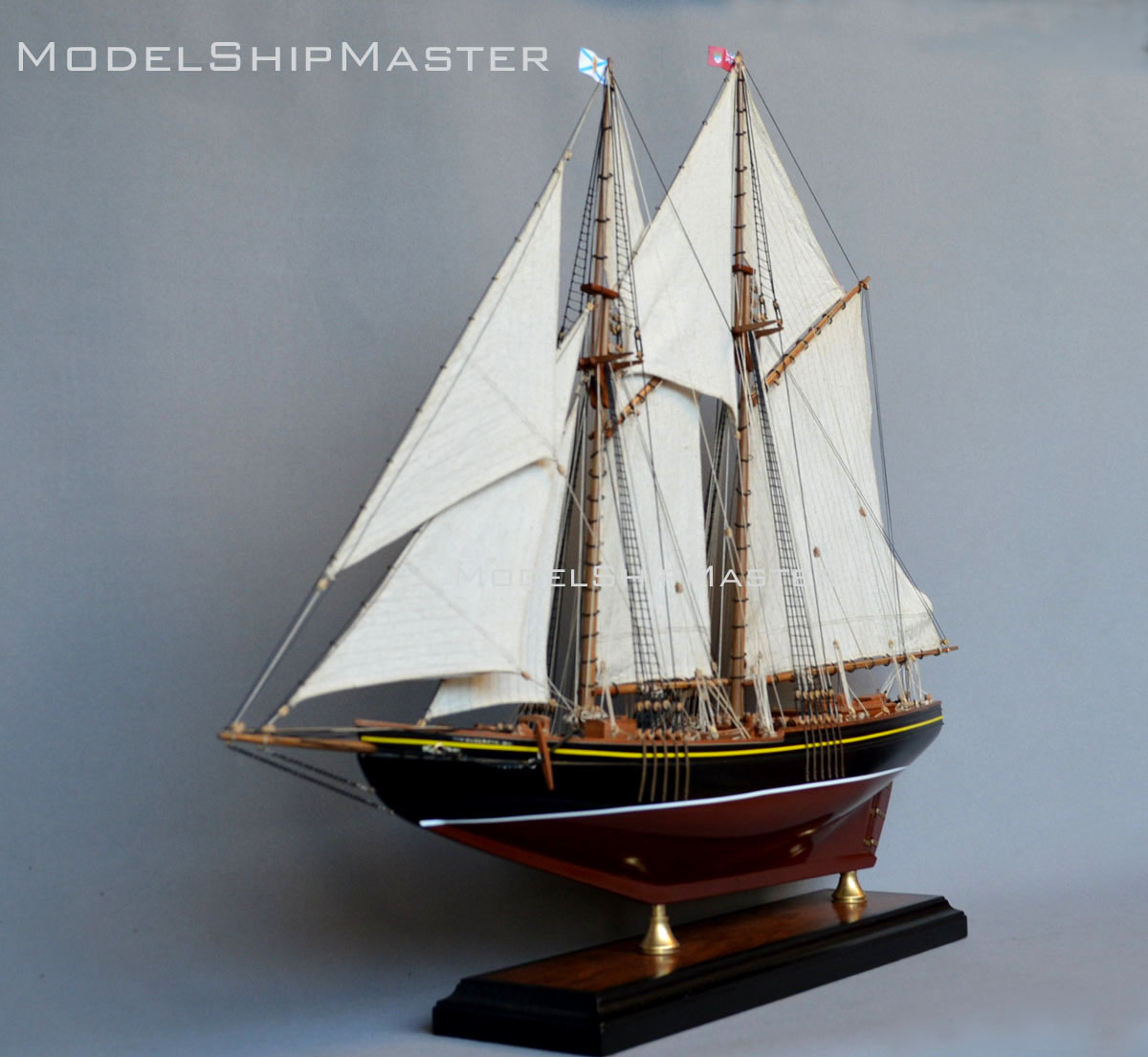
BLUENOSE fishing schooner
The most beautiful and
accurate model of the famed Canadian schooner
The most famous schooner of all time is the Canadian
schooner Bluenose. This beloved vessel won the
annual International Fishermen's Trophy race for Canada
numerous times in the period between the two world wars.
In 1920, an America's Cup
race was cancelled because a wind of 23 knots was
considered too dangerous for the racing yachts of the
time, which were made fragile by the towering sails they
carried. The fishermen of the New England and Maritime
fleets considered this a disgrace and resolved to hold
their own competition for men and ships who were ready
and able to face the sea.
The Halifax Herald newspaper
donated a cup and established the rules for the contest,
and in the years that followed, the International
Fishermen's Trophy would become a source of considerable
national pride as ships from the great fishing fleets of
Gloucester, Massachusetts and Lunenburg, Nova Scotia
vied for the title. Nova Scotia was the home of the
greatest deep-sea fishing fleet in the world, and proud
of its shipbuilding and fishing heritage. Its rival was
Gloucester, Massachusetts, which shared the same kind of
pride. For generations, the "Yanks" and the "Novies" had
delighted in racing each other to the fishing grounds.
The prospect of formalizing those races excited both
towns.
In 1920, the first competition for the Trophy was won by
a vessel from Gloucester. To the tremendous chagrin of
the Lunenburg fleet, a design was commissioned from
William J. Roue, a young naval architect from Halifax,
for a schooner that would meet the high standards of the
Lunenburg fishing fleet but that could also capture the
Trophy.
Bluenose was the result. She was launched on March 26,
1921. She took the Trophy that year and never
relinquished it, although many schooners from Nova
Scotia and the New England States were designed and
constructed to beat her. In her last race, her average speed over
the course was 14.15 knots, the
fastest pace ever recorded over a fixed course by a canvassed vessel in the history
of sailing!
Bluenose
won fame and widespread recognition for her racing
prowess. She was built at a time when Lunenburg
had many sturdy vessels that could work the Atlantic
Banks effectively, and her own abilities in this regard
were acknowledged but not loudly proclaimed. History
remembers her races, but neglects the rest. She served
the fishing fleet for nearly twenty seasons, when the
normal lifespan for a wooden schooner was only ten.
She landed many good catches and achieving the
distinction of high-liner of the fleet on
more than one occasion. She served her owners well, and brought her crew through storms that claimed many
other vessels and lives.
A combination of age, the global
depression of the 1930s, the onset of World War II, and
the arrival of diesel powered fishing trawlers finally
forced the sale of Bluenose to the West Indian
Trading Company in 1942. She spent four years as a
freighter before being wrecked on a reef near Haiti in
January of 1946. Angus Walters wanted to fly
to Haiti to direct salvage operations, but news was
mixed, misinformation and confusion prevented action,
and the Bluenose went down. No one has ever found as
much as a splinter of the wreckage.
In 1937, the Bluenose was reproduced on the Canadian
dime, where she has been ever since. In July 1963, Bluenose II was
launched. Angus Walters was aboard her maiden voyage to
the West Indies. Well into his eighties, he took the
wheel. He silently studied the feel of the new
Bluenose in the water and listened to the wind in her
sails, as if searching for an echo. Captain Angus Walters died in 1968, but Bluenose II is
still afloat.
She remains a beautiful reminder of the greatest
schooner of all time.
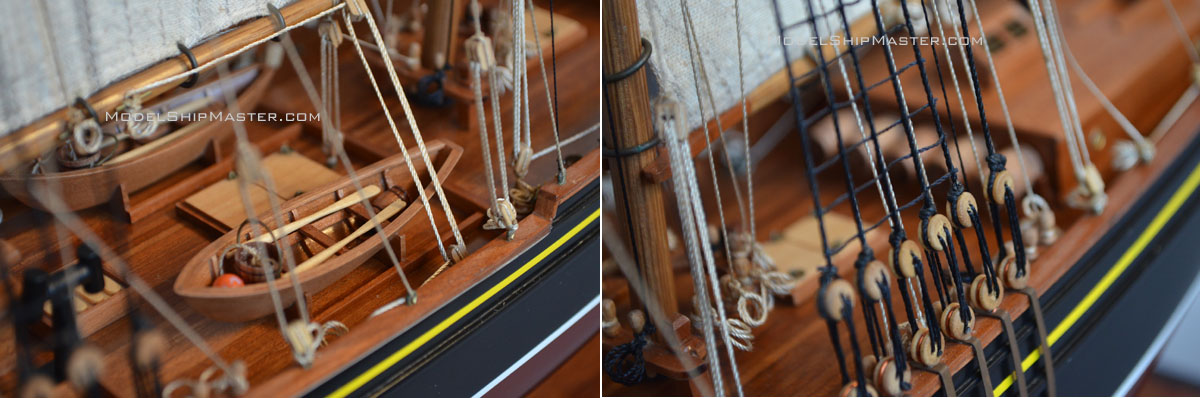
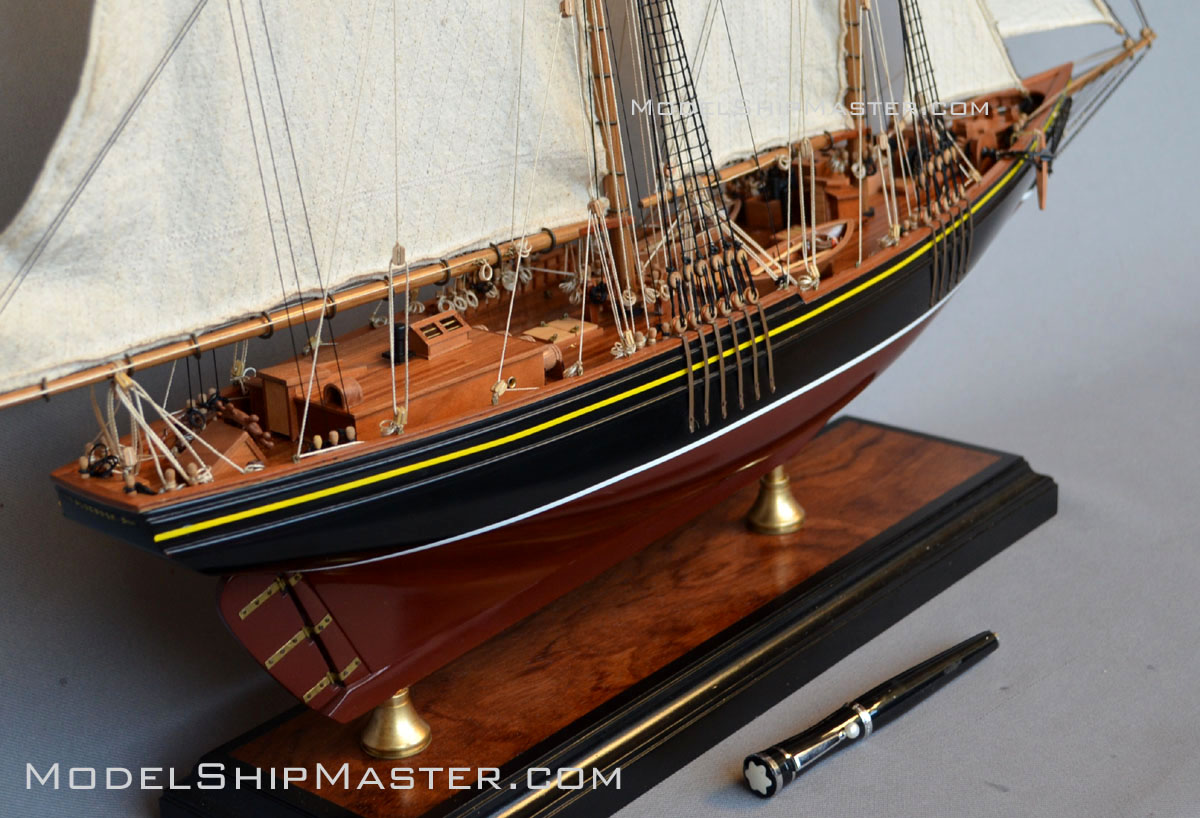
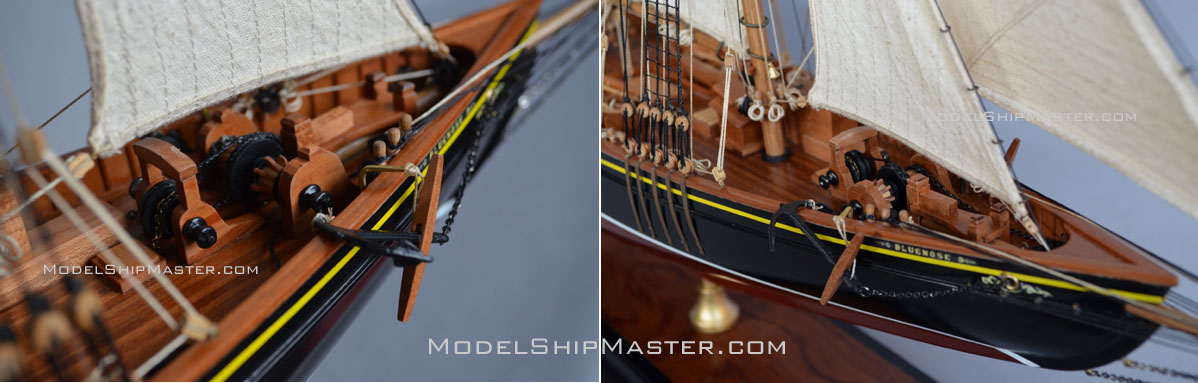
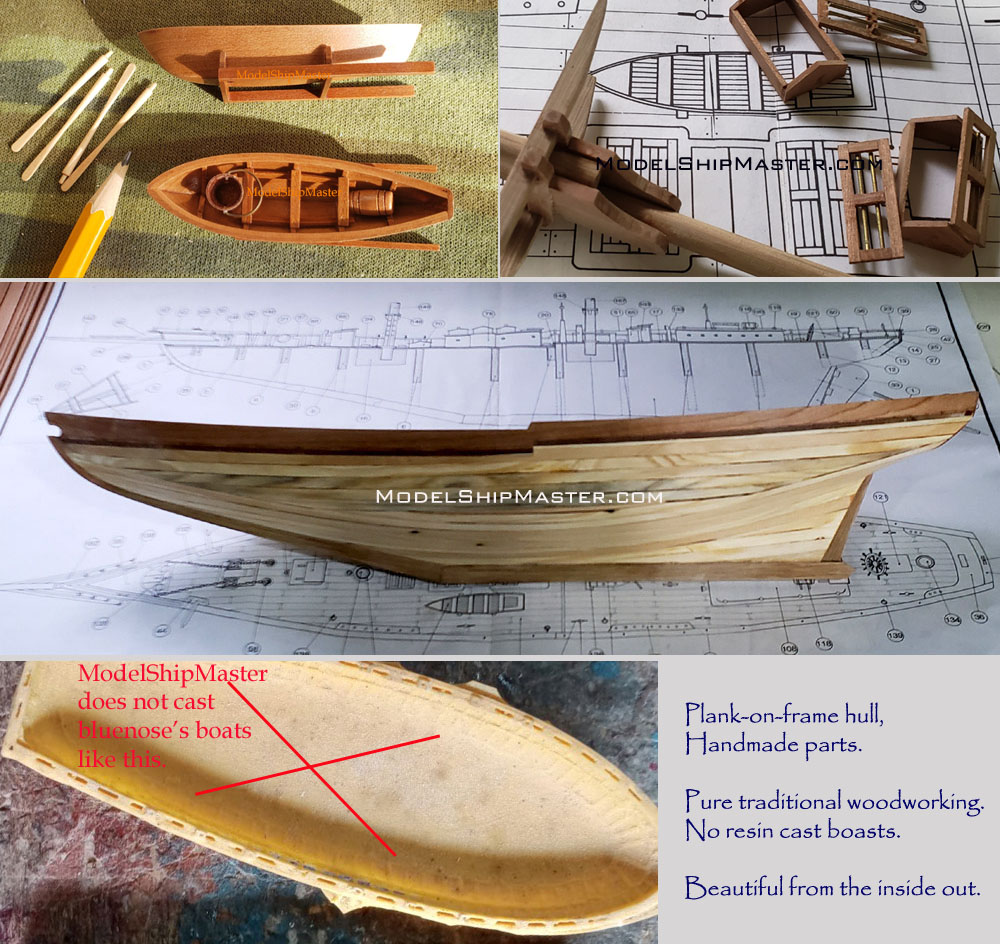
This primarily wood Bluenose
model is 31.5" long x 25" tall x 6"
wide
$2,925
 Shipping and insurance in
the contiguous USA included.
Canada $200.
Other countries, $350 flat rate. This
model is in stock and can be shipped within 5 business
days. Shipping and insurance in
the contiguous USA included.
Canada $200.
Other countries, $350 flat rate. This
model is in stock and can be shipped within 5 business
days.
ModelShipMaster.com build model ships of all types and
sizes. We are unrivaled in whatever we do.
Let us build a model of your favorite
vessel by
clicking on this link to let us know of your
preferences:
Commissioning.
Learn more about Bluenose
here:https://en.wikipedia.org/wiki/Bluenose
|




